

business travel platform becomes important when business travel is no longer an occasional purchase handled differently every time. A business travel platform succeeds when finance, managers and travellers can all use the same process without creating unnecessary friction.
This guide is for companies evaluating a central platform for employee travel. It focuses on operational control as much as booking convenience, because a useful corporate process has to work for travellers, managers and finance at the same time.

In this guide
- Map the current travel process
- Centralise booking where it reduces friction
- Use policy and approvals intelligently
- Connect payment and invoicing
- Measure adoption and reporting
Start by mapping the process you already have
Before comparing tools, document how a trip currently happens. Who requests it? Who approves it? Where is the flight booked? How is the hotel paid? Where does the invoice go? What happens when plans change? This exposes the real problems much faster than starting with a feature list.
Common pain points include duplicated data entry, unclear approval, travellers paying personally, scattered invoices and finance teams trying to reconstruct the cost after the trip. A platform should reduce those problems rather than adding another login on top of them.
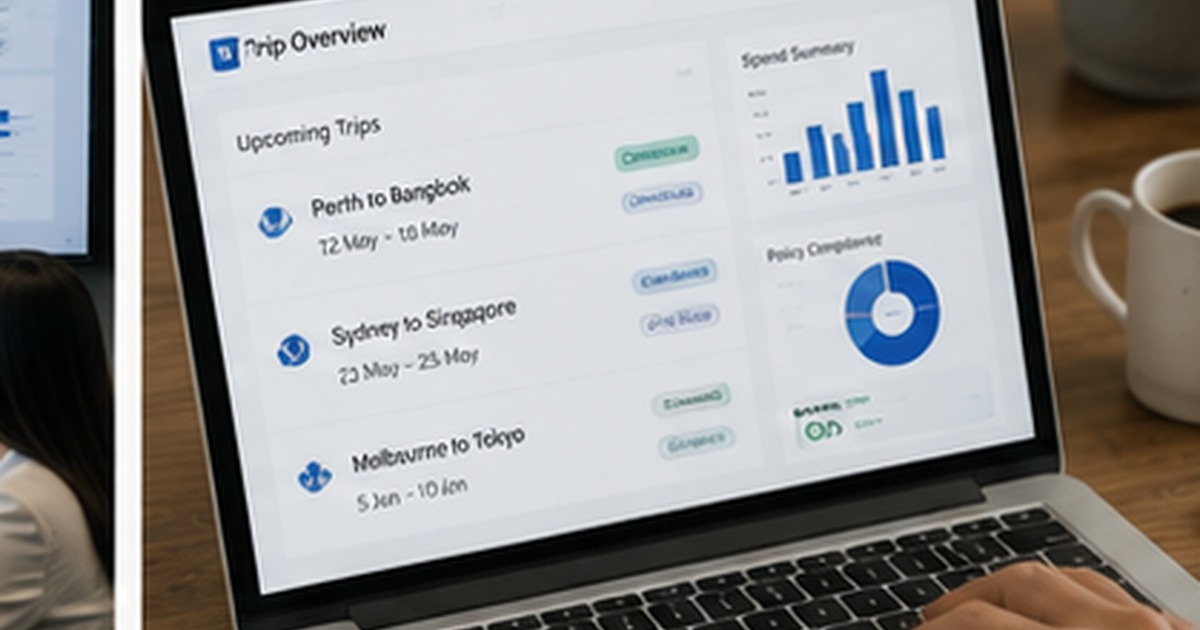
Centralisation should improve control without making travel harder
Central booking creates visibility, but adoption matters. If the process is slow or difficult, employees will find ways around it. The best design gives travellers enough choice to book a practical trip while applying the company’s policy and approval rules in the background.
This is why user experience belongs in a corporate evaluation. Search, booking, changes, support and receipt access should be straightforward enough that employees prefer the approved process.
Search And Booking
When several options look similar, search and booking is often where meaningful differences appear.
Read the booking conditions before treating the option as final. What is included, what can be changed and what happens if the schedule shifts are all part of value.
Policy Controls
A practical booking decision should treat policy controls as part of the total journey rather than as a minor detail.
For couples, families and business travellers, the trade-off may be different. Compare the effect on the people actually travelling rather than using the lowest displayed fare as the only benchmark.
Approval Workflow
Before payment, review approval workflow in the context of the traveller’s real schedule and priorities.
A useful comparison makes this item visible in the decision, even when it is not the most exciting part of planning. Small operational details are often what make a trip feel smooth or difficult.

Payments And Invoices
For companies evaluating a central platform for employee travel, payments and invoices can change both the cost and the comfort of the trip.
A cheaper option can lose its advantage if it creates extra transport, an unnecessary hotel night, additional baggage charges or hours of unusable waiting time. Put the detail beside the total price so the comparison remains realistic.
Traveller Support
One of the most useful ways to compare business travel platform is to look closely at traveller support.
This is also where search results can be misleading at a glance. Two itineraries may reach the same city but offer very different convenience, flexibility and recovery options if plans change.
Reporting And Administration
Reporting and administration deserves more attention than it often receives during an online search.
The right choice depends on the trip rather than a universal rule. A short holiday may place a high value on time, while a longer trip may tolerate a connection if the saving is meaningful.
Measure the cost of administration as well as travel
The lowest ticket price does not capture the full cost of business travel. Add the time used for approvals, invoice chasing, expense reconciliation, traveller changes and support. A slightly higher fare within a cleaner process can be better value if it removes manual work or provides useful flexibility.
Common mistakes to avoid with business travel platform
Most booking problems are not caused by a lack of search results. They come from comparing the wrong things or overlooking a condition that becomes important later. The following mistakes are worth checking before payment.
- choosing only for management features and ignoring traveller usability
- forcing approvals through email chains
- leaving invoices spread across multiple suppliers
- failing to plan for changes and urgent bookings
- buying reporting capability nobody will use
None of these points means that the cheapest, fastest or most flexible option is always correct. The aim is to understand the trade-off. Once the trade-off is visible, travellers can decide whether the saving or convenience is meaningful for their own trip.
How Alby Travel fits into the planning process
Alby Travel presents business travel as a more centralised process, combining booking, invoicing and payment support so companies can reduce the number of disconnected steps around a trip. For a business evaluating business travel platform, that is useful because the value of a platform is not limited to the booking screen; it also depends on what happens before approval, after payment and when finance needs a clear record.
The site also describes an all-in-one travel hub for flights, hotels, rides and local services. A growing company can use that broader model as a reference point when deciding which parts of travel should be centralised and which policies still need to remain internal.
The site also highlights cashback and rewards with bookings. When comparing travel, treat those benefits as part of the net value rather than a reason to accept a worse route, room or fare condition.

A practical business travel platform checklist
Use this short list immediately before booking. It is designed to catch the details that are easy to miss when several tabs, prices and itineraries are being compared at once.
- Map the existing booking process
- List the problems finance and travellers both experience
- Define must-have policy controls
- Check payment and invoice workflows
- Review support for changes and disruptions
- Test reporting against real management questions
- Plan onboarding before rollout
If every item is clear, the decision is usually much easier. The goal of a checklist is not to make business travel platform complicated; it is to stop a small overlooked detail from becoming an expensive or inconvenient problem later.
Practical planning notes for Australian travellers
International travel decisions are easier when the booking is reviewed in the same order the trip will happen. For business travel platform, begin at the departure city, follow each flight sector, then continue through arrival, baggage collection, transfer and accommodation. This chronological review often reveals friction that a price-sorted search screen hides.
Frequently Asked Questions
What should a growing company prioritise first?
Start with process clarity: who can book, who approves, how policy is applied, how invoices are captured and where travellers get help when plans change.
Does a business travel platform replace a travel policy?
No. A platform can help apply rules and centralise records, but the company still needs clear internal policy, approval authority and exception handling.
Is the cheapest business fare always the best option?
Not necessarily. Productivity, change flexibility, support, traveller time and administration can be more important than a small difference in ticket price.
What should finance teams look for?
They should look for reliable booking records, usable invoices, payment visibility, reporting that answers real management questions and a process that employees will actually follow.